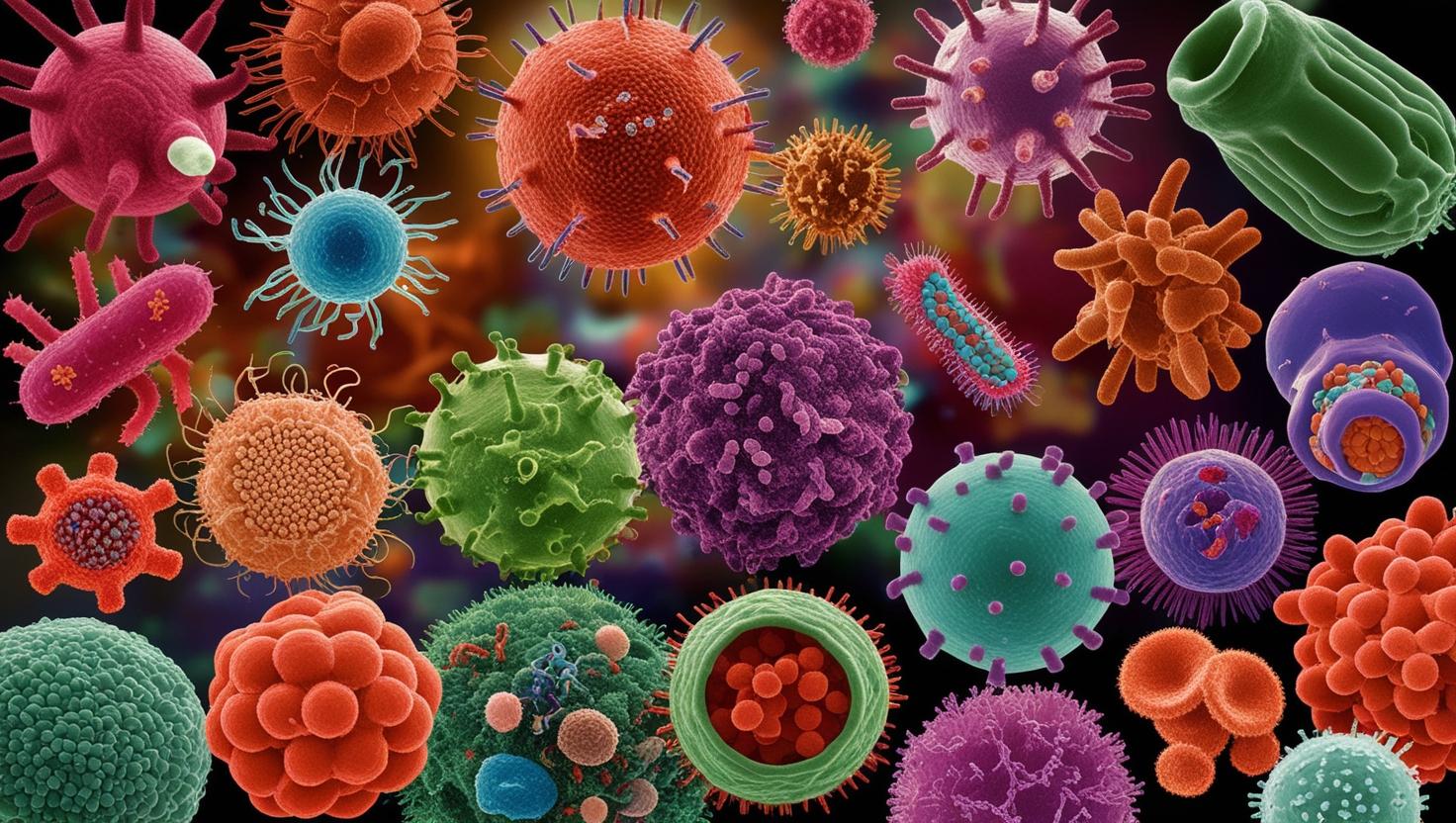
Hello there, little adventurers! Prepare to shrink down and explore a universe so microscopic that you'll need a microscope to see it! We're talking about microbes, which are tiny living entities that are everywhere and do anything from make our food wonderful to, well, occasionally make us sick. Don't worry, we'll learn how to become microbe masters!
Micromania: The Four Tiny Titans
Microorganisms come in all forms and sizes (well, tiny ones!). They're like superheroes (and supervillains) in the little world.
There are four primary groups:
Bacteria: Think of them as industrious tiny laborers. Some aid digestion, while others are less effective.
Fungi: From delicious mushrooms to mold on your bread (oops!)fungi are a varied group.
Protozoa: These critters are like chameleons in the micro-world; some can even change form!
Algae: While not all algae are tiny, some are, and they play a crucial role in oxygen production.
Experiment time!
MOLDY BREAD!
Grab some bread, leave it in a slightly wet spot for a few days, and keep an eye on it (with adult supervision and no eating!). Mold, a form of fungus, is most likely responsible for the fuzzy appearance!
Microbes: Good, Bad, and Yummy
Microorganisms may be our greatest allies or our deadliest adversaries. It's all about identifying which is which!
The Good Guys: These bacteria are the chefs of the microworld. They're in charge of creating yogurt, bread, and even the fizzy beverage we call beer! They also assist to clean up pollutants and improve soil fertility.
The bad guys (pathogens) : They are the ones who cause sickness. Consider them as microscopic intruders attempting to make us sick.
Experiment time!
Making yogurt!
You'll need milk and a little yogurt with active cultures. Mix them together, let it heated overnight, and voilà! You now have homemade yogurt due to the healthy bacteria.
Germ warfare: combating the microscopic menace
Certain illnesses, known as communicable diseases, can transmit from person to person by these microscopic invaders. Think about how colds spread!
Key Weapons in the fight:
Vaccinations are like giving your body a superhero shield against particular infections.
Washing your hands is like kryptonite to many harmful microorganisms.
Safe Food and Water: Ensure that your food is properly prepared and that your water is clean to keep germs away.
Food preservation: Keeping microbes at bay
Ever wondered how food can stay fresh for so long? It's all about preventing microorganisms from contaminating our food. We can accomplish this through:
Using Preservatives: Salt, sugar, oil, and vinegar all generate habitats that are difficult for microorganisms to survive in.
Heat and cold: Consider pasteurization (heating) and refrigeration (cooling).
Airtight containers: Microbes can cease developing if they are deprived of oxygen.
Nitrogen fixation: The Great Nitrogen Swap.
Plants require nitrogen to flourish, but they cannot absorb it straight from the air. This is where nitrogen-fixing bacteria and blue-green algae come in. They act like microscopic nitrogen chefs, transforming nitrogen into a form that plants can use. This is all part of the incredible nitrogen cycle, which maintains the quantity of nitrogen in the atmosphere balanced.
Micro-Facts that will blow your mind:
Microorganisms may be found anywhere, even the deepest oceans and the highest mountains!
A handful of dirt contains more microorganisms than the whole population of the Earth!
Trillions of microbes live in our bodies, some beneficial, some harmful, and some simply along for the journey.
Author:
Ananya Chidanand
Content
Share on:
Related post