Your Heart Has Been Beating Since Before You Were Born. Do You Know How It Works?
Every second of every day, your heart pumps blood through nearly 100,000 kilometres of blood vessels. It never takes a break. It never needs a reminder. It just works.
And yet, most students treat this chapter as a list of terms to memorise rather than a system to understand.
At Paathshala, we do not teach chapters. We decode them. So let us break down Body Fluids and Circulation the way it was meant to be understood.
1. Why Does the Body Need a Circulatory System at All?
Every living cell in your body needs oxygen, glucose, and other nutrients delivered to it constantly. At the same time, waste products like carbon dioxide need to be removed just as constantly.
Simple organisms like sponges manage this by letting water flow through their body cavities. But for complex organisms like humans, that is not enough. We need a dedicated transport system with a pump, a network of pipes, and a fluid that carries everything from one place to another.
That fluid is blood. And that pump is the heart.
Understanding this basic logic makes the entire chapter fall into place. Everything you study in this chapter exists to solve one problem: efficient transport inside a complex body.
2. Blood: Not Just a Red Liquid
Blood is a connective tissue, which surprises most students. It has a fluid matrix called plasma and solid components called formed elements, just like other connective tissues.
Plasma makes up about 55 percent of blood. It is mostly water, around 90 to 92 percent, with proteins like fibrinogen, albumins, and globulins making up 6 to 8 percent. Each of these proteins has a specific job. Fibrinogen helps in clotting. Albumins maintain osmotic balance. Globulins are involved in immune defence. Plasma without clotting factors is called serum. That distinction is frequently tested.
Formed elements make up the remaining 45 percent and consist of three types of cells.
Red Blood Cells, or erythrocytes, are the most abundant. A healthy adult has about 5 to 5.5 million RBCs per cubic millimetre of blood. They are biconcave in shape and have no nucleus in mammals. They contain haemoglobin, an iron-rich protein that carries oxygen. Each RBC lives for about 120 days and is then destroyed in the spleen, which is why the spleen is called the graveyard of RBCs.
White Blood Cells, or leucocytes, are far fewer in number, around 6000 to 8000 per cubic millimetre. They have a nucleus and are the body's defence force. There are two main categories. Granulocytes include neutrophils, eosinophils, and basophils. Agranulocytes include lymphocytes and monocytes. Neutrophils are the most abundant among WBCs at 60 to 65 percent. Basophils are the least at 0.5 to 1 percent. B and T lymphocytes specifically handle immune responses.
Platelets, or thrombocytes, are not full cells. They are fragments produced from special cells in the bone marrow called megakaryocytes. Their primary job is blood clotting. A drop in platelet count leads to clotting disorders and excessive bleeding.
3. Blood Groups: Why You Cannot Give Just Anyone Your Blood
Blood grouping is based on the presence or absence of certain antigens on the surface of RBCs.
In the ABO system, antigen A and antigen B are used for classification. Group A has antigen A and anti-B antibodies. Group B has antigen B and anti-A antibodies. Group AB has both antigens and no antibodies, which is why AB individuals are called universal recipients. Group O has no antigens but has both anti-A and anti-B antibodies, which is why O individuals are called universal donors.
The Rh system is equally important. About 80 percent of humans have the Rh antigen on their RBCs and are called Rh positive. Those without it are Rh negative. If an Rh negative person receives Rh positive blood, their body forms antibodies against it. This matters especially during pregnancy.
If an Rh negative mother carries an Rh positive baby, the first pregnancy usually goes fine because the two blood supplies are separated by the placenta. But during delivery, some foetal blood can enter the mother's circulation and trigger antibody production. In the second pregnancy, those antibodies can cross into the foetus and destroy its RBCs. This condition is called erythroblastosis foetalis and it can be prevented by giving the mother anti-Rh antibodies immediately after the first delivery.
4. Blood Clotting: The Body's Emergency Response
When you injure yourself, the body does not just let you bleed. It activates a cascade of reactions that stops the bleeding within minutes.
The injury stimulates platelets to release clotting factors. These activate a chain reaction in the plasma. The end result is the conversion of fibrinogen into fibrin, which forms a network of threads that traps damaged cells and forms a clot. Thrombin is the enzyme that converts fibrinogen to fibrin. Prothrombin is its inactive precursor. Thrombokinase is the complex that activates the conversion. Calcium ions are essential throughout this process.
Do not memorise these steps in isolation. Understand them as a sequence: injury triggers platelets, platelets activate factors, factors convert prothrombin to thrombin, thrombin converts fibrinogen to fibrin, fibrin forms the clot.
5. Lymph: The Forgotten Fluid
As blood moves through capillaries, some water and small molecules leak out into the spaces between cells. This leaked fluid is called tissue fluid or interstitial fluid. It has the same mineral composition as plasma but without most of the proteins and formed elements.
This fluid is collected by a network of lymphatic vessels and returned to the bloodstream through major veins. Once it enters these vessels, it is called lymph.
Lymph is colourless and carries lymphocytes, making it part of the immune system. It also transports fats absorbed from the intestine through special structures called lacteals. This is an important function that is often overlooked in exams.
6. Circulatory Pathways: How Different Animals Do It
Not all animals circulate blood the same way.
Open circulatory systems, found in arthropods and molluscs, allow blood to flow into open spaces called sinuses rather than staying inside vessels. Closed circulatory systems, found in annelids and all chordates including humans, keep blood inside a closed network of vessels at all times. Closed systems allow more precise control of flow.
Among vertebrates, the heart structure evolves with complexity. Fishes have a two-chambered heart with one atrium and one ventricle. They have single circulation where blood passes through the heart once per circuit. Amphibians and most reptiles have a three-chambered heart with two atria and one ventricle. Their blood partially mixes, which is called incomplete double circulation. Crocodiles, birds, and mammals have a four-chambered heart with two atria and two ventricles. Blood is never mixed. This is called complete double circulation and it is far more efficient.
7. The Human Heart: Structure and Why It Matters
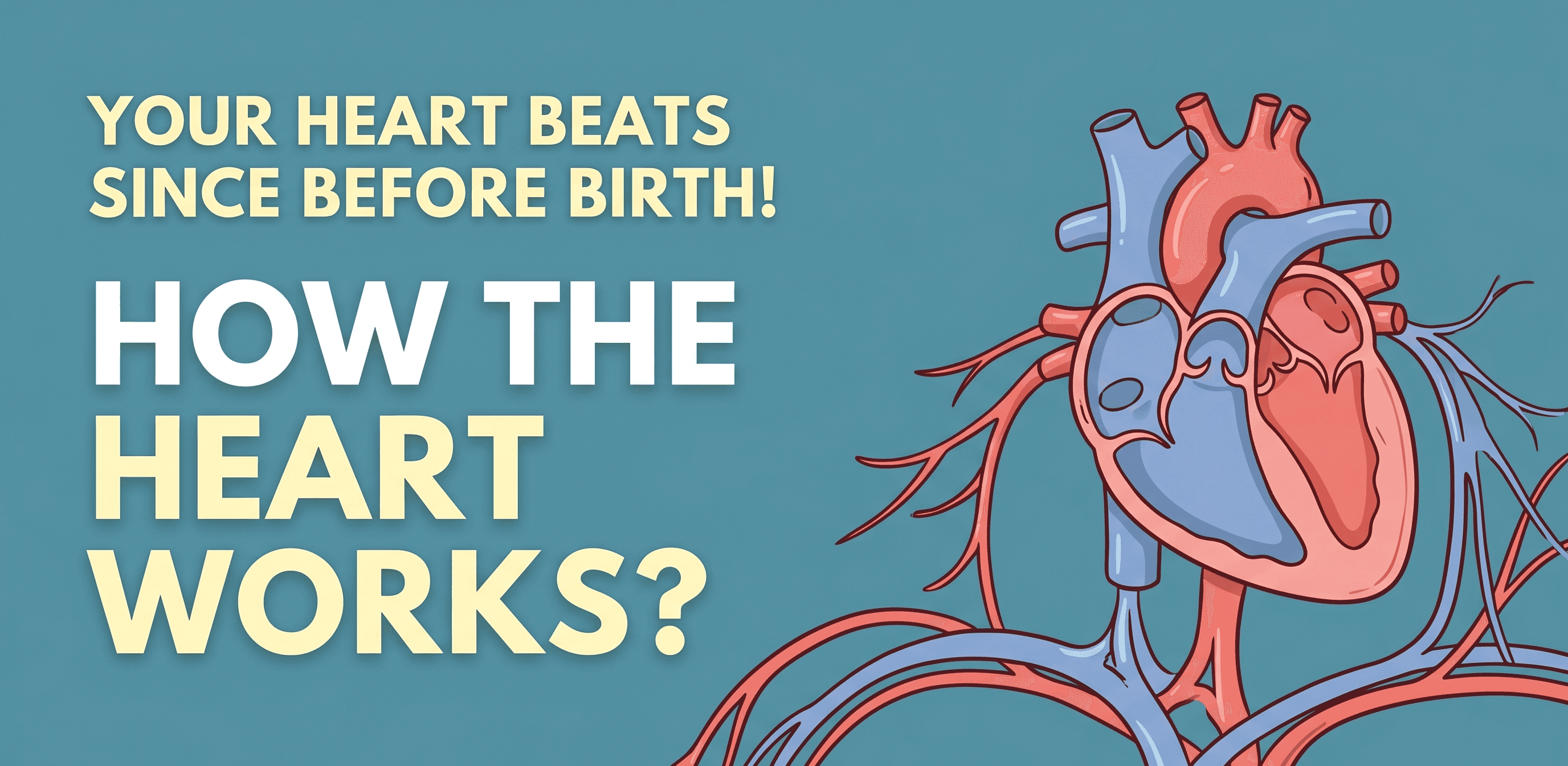
The heart sits in the thoracic cavity, between the lungs, slightly tilted to the left. It is roughly the size of a clenched fist and is protected by a double-layered membrane called the pericardium, which encloses the pericardial fluid.
The heart has four chambers. The two upper chambers are atria and the two lower chambers are ventricles. The right and left atria are separated by the interatrial septum. The right and left ventricles are separated by the interventricular septum.
Valves control the direction of blood flow and prevent backflow. The tricuspid valve sits between the right atrium and right ventricle. The bicuspid or mitral valve sits between the left atrium and left ventricle. Semilunar valves guard the openings into the pulmonary artery and the aorta.
The walls of ventricles are thicker than those of atria because ventricles have to pump blood out of the heart and into circulation, which requires much more force.
8. Nodal Tissue and the Pacemaker
The heart does not need the brain to tell it to beat. It is autoexcitable, meaning it generates its own electrical impulses. This is because of specialised tissue called nodal tissue.
The Sino-Atrial Node, or SAN, is located in the upper right corner of the right atrium. It generates 70 to 75 action potentials per minute and is called the pacemaker of the heart because it sets the rhythm for the entire organ.
The signal from the SAN travels to the Atrio-Ventricular Node, or AVN, located in the lower left corner of the right atrium. From there it travels through the Bundle of His and then into Purkinje fibres, which spread the signal throughout the ventricular walls, causing them to contract.
Because the heart is self-driven by this nodal tissue, it is called myogenic. This is a frequently asked concept.
9. The Cardiac Cycle: One Complete Heartbeat
A single cardiac cycle consists of the contraction and relaxation of all four chambers in a coordinated sequence.
It begins with joint diastole, where all chambers are relaxed and blood flows freely in. The SAN fires, causing both atria to contract simultaneously, which is called atrial systole. This pushes extra blood into the ventricles. Then the ventricles contract, called ventricular systole, which forces blood out into the pulmonary artery and the aorta. The atria relax during this time. Finally, the ventricles relax as well, called ventricular diastole, and the cycle resets.
The heart completes 72 such cycles per minute. Each cycle lasts 0.8 seconds. Each ventricle pumps out about 70 mL of blood per beat, which is the stroke volume. Cardiac output is stroke volume multiplied by heart rate, which equals roughly 5 litres per minute in a healthy individual.
Two sounds accompany each cardiac cycle. The first sound, lub, is produced when the tricuspid and bicuspid valves close. The second sound, dub, is produced when the semilunar valves close. These are clinically significant for diagnosing valve problems.
10. ECG: Reading the Heart's Electrical Story
An electrocardiogram, or ECG, records the electrical activity of the heart during a cardiac cycle. It produces a characteristic wave pattern that has three main components.
The P-wave represents depolarisation of the atria, meaning atrial contraction is about to happen.
The QRS complex represents depolarisation of the ventricles, meaning ventricular contraction is beginning.
The T-wave represents repolarisation of the ventricles, meaning the ventricles are returning to their resting state. The end of the T-wave marks the end of systole.
Any deviation from this standard pattern in an ECG indicates abnormality in the heart's electrical activity, making it an essential diagnostic tool.
11. Double Circulation: Why Humans Have Two Loops
In humans, blood travels through two separate circuits.
Pulmonary circulation carries deoxygenated blood from the right ventricle to the lungs, where it picks up oxygen, and returns as oxygenated blood to the left atrium.
Systemic circulation carries oxygenated blood from the left ventricle through the aorta to all body tissues, and returns deoxygenated blood to the right atrium via the vena cava.
Because the two circuits never mix, the tissues always receive fully oxygenated blood. This is far more efficient than the incomplete circulation seen in amphibians and reptiles.
A unique sub-circuit worth knowing is the hepatic portal system, where blood from the intestines is first taken to the liver before joining the systemic circulation. The coronary circulation is another sub-circuit dedicated entirely to supplying blood to the heart muscle itself.
12. Disorders of the Circulatory System
Hypertension is blood pressure consistently above 140/90 mm Hg. Normal is 120/80. It damages the heart, brain, and kidneys over time.
Coronary Artery Disease, also called atherosclerosis, occurs when deposits of fat, calcium, and cholesterol narrow the coronary arteries and reduce blood flow to the heart muscle.
Angina refers to chest pain caused by insufficient oxygen reaching the heart, usually as a result of reduced blood flow through narrowed arteries.
Heart Failure is when the heart cannot pump blood effectively enough to meet the body's demands. It is different from a heart attack, where the muscle is suddenly damaged, and different from cardiac arrest, where the heart stops beating altogether.
Why This Chapter Actually Matters
The circulatory system is not just exam content. It explains why athletes have higher cardiac output. It explains why blood type matching matters in transfusions. It explains how doctors read ECGs to detect heart disease. It explains why Rh incompatibility during pregnancy can be life-threatening.
Understanding the logic once makes the entire chapter memorable. And that is always the goal at Paathshala.
Want to Study Every Chapter This Way?
At Paathshala, our mentors break down every chapter conceptually so that you understand the system, not just the syllabus.
📋 Book a Free Career Counselling Session with Paathshala: 👉 Fill in the Form Here
Download the Paathshala App to connect with a mentor who gets your learning style:
Are You a Teacher Reading This?
If you are an educator who believes in concept-driven teaching and are looking for flexible online teaching opportunities from home, we invite you to join us. We provide autonomy, academic support, and a platform that values quality education.
To become part of our mission, email your resume and interest to apeksha.negi@safwhigre.com. Our team will connect with you for an onboarding discussion.
Let us build a future where quality education is accessible, engaging, and effective for every learner.
Author:
Adaditigo3
Content
Share on:
Related post